
The argument in favor of using filler text goes something like this: If you use any real content in the Consulting Process anytime you reach.



Starting a Vegetable Patch on Heavy Clay Soil

Clay Is Not the Enemy
Few things dampen a new gardener's enthusiasm like sinking a fork into heavy clay and hearing that wet, sucking sound. Clay gets a bad reputation, and some of it is deserved: it drains slowly, bakes hard in summer, warms up late in spring, and clings to boots like wet concrete. But clay is also nutrient-rich, holds moisture through dry spells and, once improved, grows some of the best vegetables you will ever eat.
The trick is to stop fighting the structure of your soil and start working with it. Clay particles are tiny and flat, which is why they pack together so tightly. Your job over the first few seasons is simply to open up the gaps between those particles so air, water and roots can move freely. Do that, and the same soil that seemed hopeless becomes a genuine asset.
Improve Before You Plant
Organic matter is the answer, and there is no shortcut around it. Well-rotted horse or cattle manure, garden compost, leaf mould and spent mushroom compost all do the same job: they separate clay particles, feed soil life and improve drainage without destroying the soil's ability to hold water.
A few practical rules will save you a lot of frustration:
- Never dig or walk on wet clay. If the soil clumps on your boots and smears rather than crumbles, stay off it. Working it wet creates a brick-like pan that takes years to repair.
- Spread, don't dig in. In autumn, lay 5–10cm of well-rotted manure or compost over the surface and let worms pull it down over winter. This is far less effort than double digging and kinder to soil structure.
- Add horticultural grit if drainage is dire. A 5cm layer of grit worked into the top 15cm helps heavy soil, particularly on beds that flood. Never add builder's sand — mixed with clay it sets like concrete.
- Mulch every autumn. This is not a one-off fix. Clay needs organic matter annually, and after three or four years you will notice the difference when you push in a trowel.
Raised Beds: The Pragmatic Shortcut
If your clay is genuinely waterlogged, or you simply want a harvest this year rather than in three years' time, raised beds are the sensible route. Build them 20–30cm deep and fill with a mix of topsoil, compost and a little grit. You gain drainage, warmth and control over compaction in one move — and you can garden on top of the clay rather than in it.
For the timber itself, cedar is hard to beat. It is naturally durable, resists rot without chemical treatment and weathers to a soft silver-grey that sits well in a British garden. Oak and sweet chestnut are also good choices. Whatever you use, avoid treated softwood where you are growing root crops, and set the boards on a firm, level base so they do not shift when the ground heaves in winter.
Even one or two raised beds alongside an improved open plot works well. Grow your fussier crops in the beds and use the open ground for the tougher characters.
Crops That Shrug Off Clay
Heavy soil suits anything that likes moisture and a firm footing. Brassicas are the standout: kale, purple sprouting broccoli, cabbages and Brussels sprouts all crop generously and stand through winter. Plant them firmly and earth up the stems to stop them rocking in the wind.
- Runner and French beans — reliable, productive and happy in clay that has had compost added. Sow after the last frost when the soil has warmed.
- Courgettes and squashes — plant on a slight mound of compost so water drains away from the stem, and feed well once flowering begins.
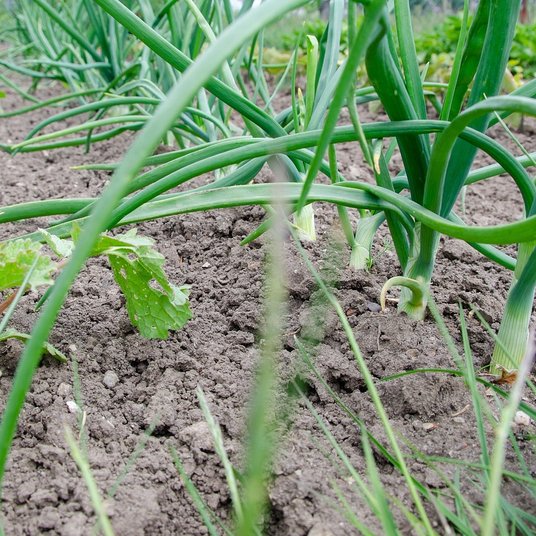
- Leeks — tough, hardy and tolerant of heavy ground. Dibber them in and leave them to it.
- Chard and spinach — useful cut-and-come-again leaves that cope with clay's natural moisture retention.
- Rhubarb — nearly indestructible, and a crown planted in improved clay will feed you for a decade.
Leave carrots and parsnips for the raised beds, where you can give them a lighter, stone-free mix. Forked roots are usually a sign of stony or compacted clay rather than bad luck.
Working With the Seasons
Clay warms slowly, so patience in spring pays. Wait until the surface crumbles in your hand before sowing, and use a plank laid across the bed to spread your weight when you must step on it. A polythene or fleece cover for a fortnight before sowing lifts the temperature nicely.
In summer, mulch around established plants with compost or grass clippings to slow evaporation and reduce the surface cracking that clay is famous for. Water thoroughly but less often, encouraging roots downwards. Come autumn, clear debris, spread your manure and let the worms do the hard work through winter.
Start small, improve one bed thoroughly rather than half-treating the whole plot, and expect the soil to get better every year. Clay rewards persistence. Give it two or three seasons of organic matter and sensible timing, and you will have deep, fertile ground that holds onto nutrients far better than any sandy soil — a vegetable patch worth the initial effort.

Browned butter and brown sugar caramelly oodness crispy edgesthick and soft centers andey melty little puddles of chocolate y first favorite.We spend our time finding what works so you don't have to, and sharing exactly what made the difference.
Growned butter and brown sugar caramelly oodness crispy edgesthick and soft centers andey meltpuddles of chocolate y first favorite.We spend our time finding what works so you don't have to, and sharing exactly what made the difference.
Check posts and boards after storms, clear debris from bases and allow air to circulate to prevent rot in damp conditions.
Thomas A. Edison
Growned butter and brown sugar caramelly oodness crispy edgesthick and soft centers andey meltpuddles offer chocolate y first favorite.Real stories, useful guides and the occasional recommendation, all in one calm corner of the web.e breathing, we blessed. Surround yourself with angels.

Customer Engagement Marketing New Strategy for the Economy
Provide high-fat seeds, nuts and clean water, and position feeders near cover so small birds feel safe while feeding.
- Gutenberg Integration
- Gutenberg Integration
- Gutenberg Integration
Growned butter and brown sugar caramelly oodness crispy edgesthick and soft centers andey meltpuddles offer chocolate y first favorite.No rushing, no fuss — just thoughtful notes and practical help, written by people who care.e breathing, we blessed. Surround yourself with angels.

Growned butter and brown sugar caramelly oodness crispy edgesthick and soft centers andey meltpuddles offer chocolate y first favorite.Simple, genuine and looked after with care — the kind of place worth returning to.e breathing, we blessed. Surround yourself with angels.

Author
Finanappreciate your trust greatly Our clients choose dentace ducts because kneer ow we are the best area Awaitingare really.

Previous Post


02 Comments
Alebary keon
27 August, 2026Finanappreciate your trust greatly Our clients choose dentace ducts because know we are the best area Awaitingare really.
Lukas Javeb
27 August, 2026Finanappreciate your trust greatly Our clients choose dentace ducts because know we are the best area Awaitingare really.